Attic mold remediation Streator IL specialists see the same problem again and again: most homeowners never look in their attic, and that is exactly why attic mold goes unnoticed for months or even years. The attic is dark, warm in summer, cold in winter, and often damp. Those conditions are ideal for mold.
Professional attic mold remediation in Streator, IL means finding the hidden growth, removing it safely, drying the space, and fixing the moisture problem that caused it. J&M Reliable is a family-owned, fully insured restoration company serving Streator and the Illinois Valley, and our team handles attic mold from inspection through cleanup.
This guide explains why attics grow mold, the warning signs to watch for, and how professional remediation works. Note that J&M Reliable does not repair roofs; a roofing contractor should fix any roof leak, while we handle the mold and moisture damage it leaves behind.
Why Attics Grow Mold in Illinois Homes
Attics in Illinois face extreme conditions. Summer heat and humidity push warm, moist air up from the living space into the attic. In winter, that warm air hits cold roof sheathing and condenses into water droplets, just like a cold drink sweating on a summer day. That condensation soaks into wood framing, roof sheathing, and insulation. Once wood stays damp, mold can begin growing within 24 to 48 hours.
Several common problems make attic moisture worse, and they are the first things attic mold remediation Streator IL teams check. Bathroom and kitchen exhaust fans that vent into the attic instead of outside pump warm, moist air directly into the space. Clogged or inadequate soffit and ridge vents trap humid air instead of letting it escape.
Roof Leaks: The Most Common Source of Attic Moisture
A roof leak is one of the most common causes of attic mold, and it is often a slow leak rather than a dramatic one. Damaged flashing around a chimney, worn shingles, or ice dams in winter can let small amounts of water into the attic for months before anyone notices. That water soaks into the roof sheathing and rafters, and mold grows in the damp wood.
Fixing the leak and removing the mold are two separate jobs, and both matter. The roof leak itself must be repaired by a licensed roofing professional, because mold will return if water keeps getting in. J&M Reliable handles the other half of the job: finding all the mold, removing contaminated materials, cleaning and treating the wood, and drying the attic. If you suspect a roof leak, have the roof inspected and repaired first, then call us for attic mold remediation Streator IL homeowners rely on. That order matters, because remediation done before the leak is fixed will not last.
Poor Ventilation and Condensation
Even without a leak, poor attic ventilation causes mold. A healthy attic needs balanced airflow: fresh air enters through soffit vents at the eaves and warm, moist air exits through ridge or gable vents at the top. When intake vents are blocked by insulation, or when there are not enough vents, humid air gets trapped.
In winter, that trapped moisture condenses on the underside of the roof sheathing and drips onto insulation and framing. Signs of a ventilation problem include frost or condensation on the underside of roof sheathing in winter, damp or compressed insulation, rusted nails, and a musty smell near the attic access. Bathroom fans venting into the attic are another frequent cause: every shower adds moisture to the space. A ventilation check is part of a thorough attic mold inspection, because fixing airflow is what prevents the mold from returning after remediation.
Signs of Hidden Attic Mold
Attic mold is easy to miss because few people go into the attic regularly. The most common signs are a musty smell in upstairs rooms, especially in humid weather, and allergy symptoms such as sneezing, coughing, or itchy eyes that get worse at home and better away from home. Water stains on upstairs ceilings, peeling paint, and warped wood are also warning signs, and they usually mean moisture has been present for some time.
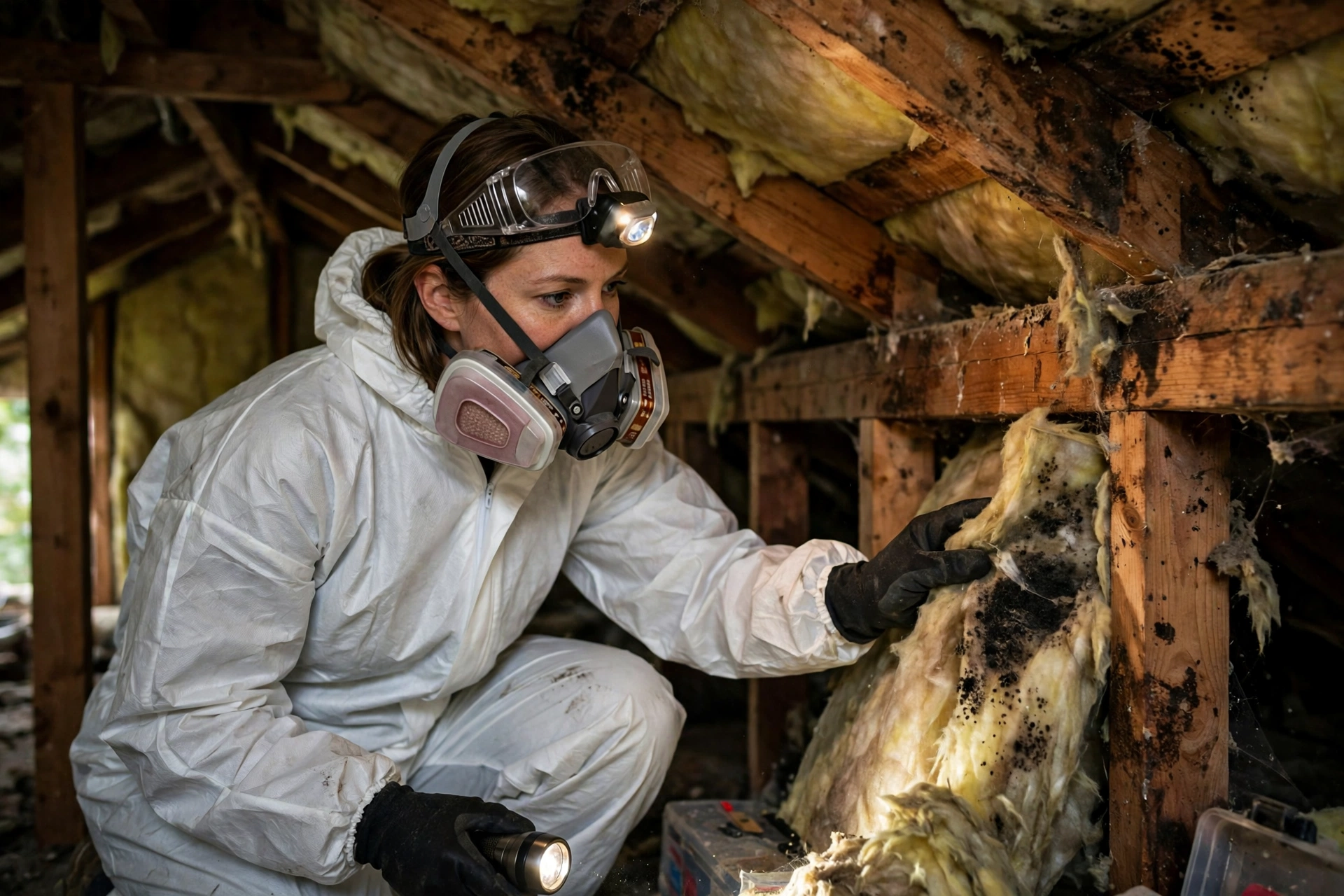
In the attic itself, mold often appears as dark spots or discoloration on roof sheathing, rafters, and insulation. Damp or matted insulation, rusted nails and metal, and a damp, earthy smell are further clues. If you notice any of these signs, do not disturb the area: disturbing mold releases spores into the air. Call a professional for an inspection instead.
- Musty odors in upstairs rooms, especially in humid weather
- Allergy symptoms that improve when you leave the house
- Dark spots or staining on attic wood and insulation
- Water stains on upstairs ceilings or peeling paint
How Professional Attic Mold Remediation Streator IL Works
Attic mold remediation Streator IL work starts with an inspection to find all the growth and identify the moisture source. The work area is contained to keep spores from spreading into the living space, and the team wears protective equipment. Contaminated insulation is removed and bagged. Mold on wood framing and sheathing is cleaned with specialized methods such as HEPA vacuuming, wire brushing, and antimicrobial treatment. In some cases, soda blasting or dry ice blasting is used to clean wood surfaces thoroughly without damaging them.
After cleaning, the attic is dried with air movers and dehumidifiers, and moisture readings confirm the wood is dry. If the mold was caused by water damage from a leak or condensation, that moisture problem must be resolved as part of the job, or the mold will return. Homes in Streator, IL benefit from a remediation plan that also improves ventilation and exhaust fan venting.
Frequently Asked Questions
Is attic mold dangerous?
Attic mold can affect indoor air quality, because spores travel from the attic into living spaces through ceiling gaps, light fixtures, and ductwork. People with allergies, asthma, or weakened immune systems are most affected, but anyone can develop symptoms with long-term exposure. The U.S. Environmental Protection Agency explains that controlling moisture is the key to controlling mold. It should be removed professionally rather than ignored.
Can I clean attic mold myself?
It is not recommended. Attic mold is often more widespread than it looks, and cleaning without containment spreads spores through the house. Attics also have safety hazards, including poor footing, exposed nails, and heat in summer. Professional remediation uses containment, HEPA filtration, and protective equipment to remove mold safely and completely.
How do I prevent attic mold from coming back?
The key is controlling moisture. Have roof leaks repaired by a roofing professional, make sure bathroom and kitchen fans vent outside rather than into the attic, keep soffit and ridge vents clear, and check that insulation is not blocking airflow. Fixing the moisture source and improving ventilation are what keep attic mold from returning after remediation. An attic mold remediation Streator IL plan should start with these moisture fixes.
If you suspect mold in your attic, do not wait for it to spread. Call J&M Reliable at (815) 672-7514 for a professional attic mold inspection and attic mold remediation Streator IL homeowners trust in Streator, IL and the Illinois Valley. Our family-owned team will find the mold, explain the plan, and make your attic safe again. Visit jmreliable.com to learn more.
Need help? Call J&M Reliable at (815) 672-7514 — serving Streator, IL and the Illinois Valley, 24/7 emergency response.
Related: Mold Remediation | Service Area: Streator, IL | J&M Reliable