Commercial flat roofs hold water. It is a hard truth. Unlike pitched residential roofs, flat structures do not shed rain instantly. Water sits up there. It waits for a weak spot. When a commercial roof fails, the damage is immediate. Ceiling tiles collapse. Expensive inventory gets ruined. Electrical systems short out. The clock is ticking the second water enters your building. Business owners need absolute reliability overhead. They also need rapid cleanup when severe storms overwhelm the system.
A proper TPO roofing membrane installation protects your property from the top down. It locks water out completely. But how does this system actually work? Thermoplastic Polyolefin (TPO) is the dominant choice for flat roofs today. It replaced old black rubber roofs for very good reasons. It offers incredible energy efficiency. It features fused watertight seams. It stands up to harsh Illinois weather. Let’s break down the exact mechanics of this single-ply roofing system. We will explore how it stops catastrophic indoor water disasters before they ever start.
Mechanically Attached vs Fully Adhered Systems
A successful TPO roofing membrane installation requires the correct fastening method. The building structure dictates this choice. Contractors generally use two distinct approaches. The first is a mechanically attached system. Roofers roll out the white membrane. They grab heavy-duty steel screws. They drive barbed metal plates directly through the membrane edges into the steel roof deck. This method goes down incredibly fast. It is highly cost-effective for large warehouses. The membrane can flutter during high winds though. That fluttering pulls on the mechanical fasteners over time.
The second option is a fully adhered system. A professional single ply membrane roofer uses industrial bonding adhesives. They spread this glue evenly. They press the TPO sheet directly to the insulation board underneath. This eliminates wind uplift completely. The roof stays perfectly flat. It looks exceptionally clean. Fully adhered roofs perform much better in severe storm conditions. The membrane never billows up. The choice depends entirely on your specific building code and commercial budget. Both methods work well when installed correctly.
Securing the Roof with TPO Heat Welding
Old rubber roofs use seam tape and glue. That liquid glue eventually dries out. It shrinks. Water sneaks right in. TPO roofs are entirely different. They rely exclusively on TPO heat welding for ultimate protection. This process uses zero glue.
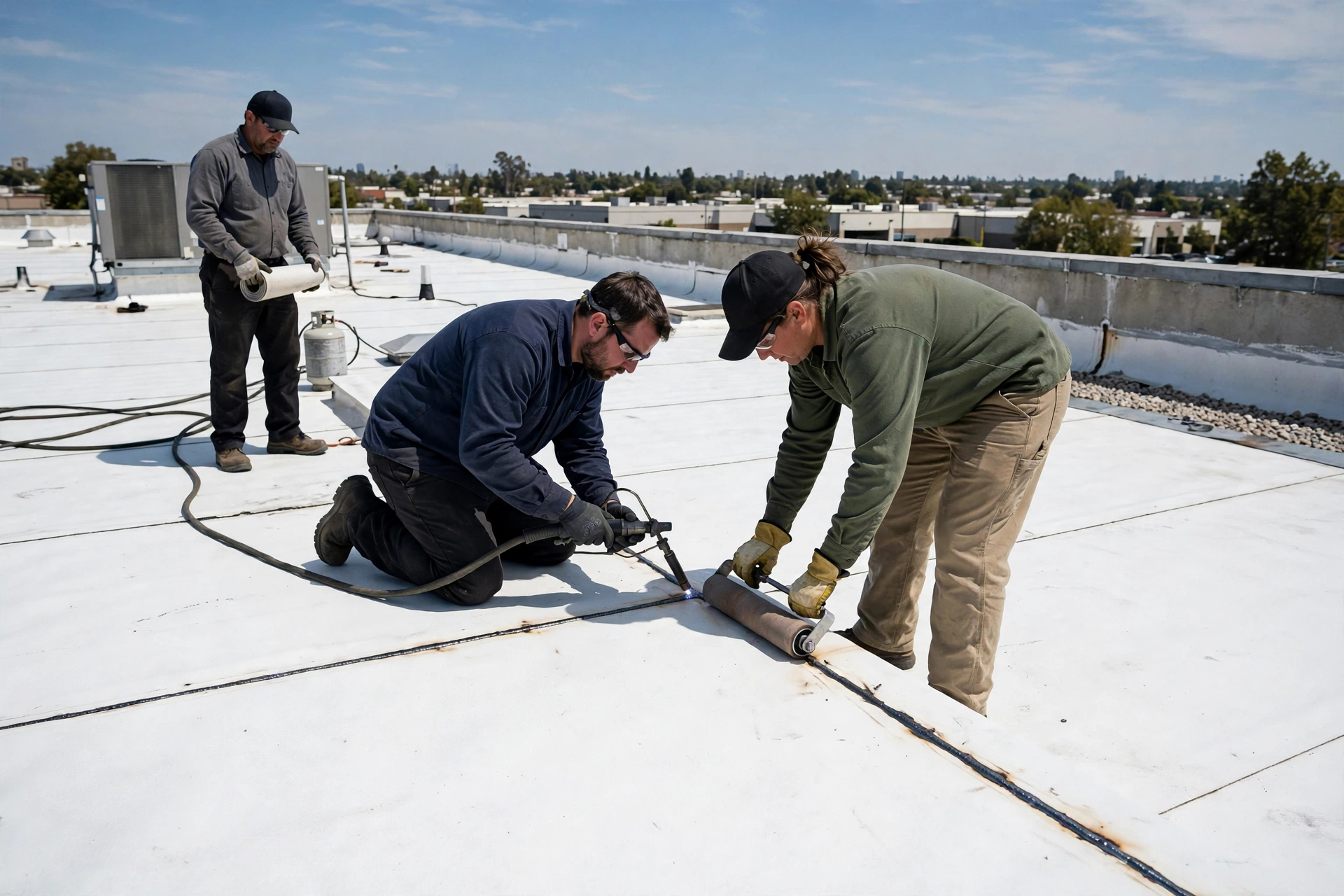
Roofers use robotic hot-air welding machines. These machines run straight down the seam. They blast 1,000-degree air directly between the overlapping TPO sheets. A heavy silicone roller follows right behind the heat nozzle. This process physically melts the two plastic sheets together. They fuse into one solid unbroken piece of rubberized plastic. The seam actually becomes the strongest part of the entire roof.
Contractors must also hand-weld the tricky details. They use small heat guns around plumbing pipes and roof drains. Proper TPO heat welding guarantees water cannot penetrate the joints. Roofers even drag a sharp metal probe along the finished seam. They check for tiny false welds. If the weld is done right, standing water just sits there safely. It never leaks through to your ceiling grid.
Upgrading Commercial Flat Roof Insulation
A bare metal roof deck offers zero thermal protection. You must install thick commercial flat roof insulation before ever rolling out the TPO membrane. Roofers typically use Polyisocyanurate (ISO) foam boards. They lay these stiff boards down first. They stagger the joints tightly to prevent thermal bridging.
This thick insulation does two critical things. It stops expensive heating and cooling from escaping through the ceiling. This raises the overall thermal value of the building. It also creates a rigid flat base for the membrane. Many flat roofs suffer from standing water. Roofers install tapered ISO boards to create a slight slope. This forces rainwater directly toward the roof drains. It prevents heavy ponding.
TPO is incredibly tough. It offers high puncture resistance against falling tree branches and dropped maintenance tools. It desperately needs a solid backing though. If the commercial flat roof insulation is soft from an old leak, the TPO can stretch and tear. Upgrading your ISO boards protects your building and lowers your monthly utility bills simultaneously.
The Cool Roof Advantage and Solar Reflectance
Summer heat destroys traditional black tar roofs. The dark surface literally bakes in the afternoon sun. It absorbs huge amounts of thermal energy. This forces your commercial air conditioner to work constantly just to keep the top floor cool. A white commercial TPO roof replacement changes that dynamic completely.
TPO naturally reflects the sun. It features exceptionally high solar reflectance ratings. The commercial building industry calls this a Cool Roof system. The bright white membrane bounces harsh UV rays right back into the atmosphere. The roof surface stays remarkably cool to the touch even in July. This drastically lowers the internal temperature of your warehouse or office building. It extends the mechanical life of your expensive rooftop HVAC equipment. The energy savings alone often pay for the entire commercial TPO roof replacement over a ten-year span. It is a smart long-term financial investment for any commercial property owner.
Call JM Reliable for Commercial Water Damage Restoration
The best roofs still fail under extreme weather conditions. A punctured TPO membrane lets heavy rain inside rapidly. Your expensive commercial inventory gets soaked. Drywall crumbles fast. Floors warp. You need a trusted local restoration company immediately to stop the bleeding. Business downtime costs you money every single hour.
JM Reliable is your direct answer. We handle severe water extraction and structural drying across Streator and the Illinois Valley. We are a family-owned business with over 50 years of trusted history. We proudly serve Ottawa, La Salle, Morris, Dwight, and Pontiac. We mitigate commercial floods. We extract the standing water quickly using heavy equipment. We prevent toxic mold from shutting down your daily operations. Seniors, first responders, and veterans always get 10% off our services. We offer honest upfront pricing with absolutely no hidden fees. We work efficiently so you can reopen your doors fast. Call our 24/7 emergency response team right now at (815) 672-7514. We have a best possible solution for all these problems.